Rue de Lille
An Officer and a SpyRue de Lille is the Paris street where Georges Picquart’s Operation Benefactor turns an apartment opposite the German Embassy into a clandestine observation post. Its close-set addresses make the street both a practical surveillance position and a place where intelligence gathering confronts its limits: the operation can record visitors and catch a glimpse of an alleged spy, but its photographs and intercepted conversations are mostly inconclusive.
The Embassy and the Street
The target is Hôtel de Beauharnais, the German Embassy in Paris, at No. 78 Rue de Lille. From the street, a high wall partly screens the embassy grounds, but its large wooden gates stand open onto a paved courtyard with parked cars. Beyond it rises a five-storey mansion with a pillared portico; red-carpeted steps lead to the entrance, and the German Imperial Eagle hangs above it. The embassy is less than two hundred metres from the French office from which Picquart can reach the narrow street by turning left and then right.
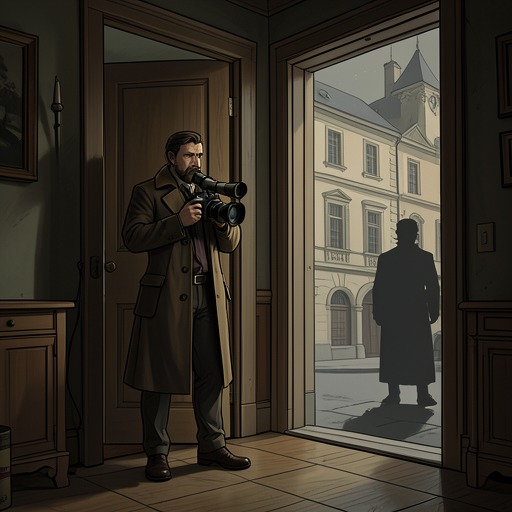
Across from the embassy, at No. 101, an apartment becomes the proposed observation post. The position offers a direct view of the embassy, while the apartment beneath it is already rented by the embassy and serves as a kind of officers’ club. That arrangement gives the surveillance team a chance not only to watch who enters and leaves, but also to try to listen through the floor.
Operation Benefactor
Picquart’s associate proposes the Rue de Lille apartment as a way to monitor the embassy without making an openly conspicuous approach that might prompt a diplomatic complaint. Picquart approves the idea partly because it gives him an operation independent of Hubert-Joseph Henry. He insists on a tenant with a plausible reason to remain inside during the day, so that the observation post will not draw suspicion.
The operation is named Benefactor, a code name for Charles Ferdinand Walsin Esterhazy borrowed from the girls of Pigalle. Picquart supplies six hundred francs for the apartment deposit and four hundred francs in advance pay, and warns the operative to keep the work secret and avoid being seen with him. The apartment is rented and furnished for surveillance: sealed cases bring optical and photographic equipment and darkroom chemicals, carried upstairs by personnel from the French detective police. Desvernine, using the cover identity Houdin, visits to explain the work.
Surveillance and Its Limits
On an April afternoon, Picquart visits the apartment in civilian clothes, wearing his hat low over his face. Inside, the windows are shuttered and the electric lights are on. Voices and laughter from the embassy’s club below can still be heard, but the sound is muffled. Desvernine lies on the bare floorboards with his head in the fireplace, trying to make out the conversation; he can nearly distinguish the speakers’ words, but not quite. The effort captures the operation’s peculiar intimacy and its practical frustration: the watchers are directly above their targets, yet proximity does not guarantee usable intelligence.
Operation Benefactor continues through the spring and into July, producing stacks of blurred photographs, lists of visitors described only in tentative terms, and fragmentary transcripts with crucial passages unintelligible. Its sole tangible result is one photograph of Esterhazy leaving the embassy. By then Picquart has spent thousands from the secret fund left by Jean Sandherr, risked a serious diplomatic crisis, and concealed from his superiors the possibility that a traitor remains at large. Rue de Lille has offered access, but not the decisive evidence the operation was meant to secure.